
A towering skyscraper offers a unique perspective, much like the challenge of fitting a sofa in a 5-foot elevator.
This task is like solving a tricky puzzle; every step is essential for success. Using creativity and careful planning, these expert tips will help you turn a tough task into a successful accomplishment.
Measure Your Sofa and Elevator
The first step to fitting your sofa is to get exact measurements of both the sofa and the elevator, paying close attention to the elevator dimensions. Start by measuring the length, width, and height of your sofa, including any parts that stick out, like armrests or cushions, which might change its size. This helps you understand how to plan for moving the couch into the elevator or onto a dolly.

Next, measure the inside of the elevator carefully. Besides checking the height, width, and depth, look for obstacles like handrails or control panels that could take up space and make it harder to move big furniture.
With these measurements, you can come up with a good plan to use the space wisely and avoid problems. This careful planning not only boosts your confidence but also shows your ability to handle space challenges like a pro.
Choose the Right Sofa Orientation
Choosing the best way to position your sofa is crucial for making the most of the elevator space and ensuring an easy move. It’s important to look at the sizes of both the sofa and the elevator.
Try to position the sofa so its length is upright, giving you more room. This often helps the sofa fit better in tight spaces, making it easier to move.
By trying different angles—like tilting it horizontally or vertically—you might find a way that fits both lengths. Staying focused and flexible will help you overcome space challenges with confidence and creativity.
Feel confident as you use smart planning to fit your furniture into a small 5-foot elevator. This is a chance to show off your problem-solving skills and improve your approach, turning what seems impossible into something possible with your resourceful and forward-thinking mindset.
Disassemble the Sofa if Possible
Check how your sofa is built, especially looking for parts that can be taken off, like legs, armrests, or cushions. Removing these parts can make the sofa smaller and easier to move.
If you can take it apart, follow the manufacturer’s instructions to avoid damaging anything.
Sofas are often designed with removable parts to make moving them easier, especially in tight spaces like elevators.
For instance, taking off the legs lets you stand the couch more upright, which fits better in a 5-foot elevator.
After taking it apart, keep track of each piece so nothing gets lost during the move. This will make putting it back together easier.
This careful planning isn’t just practical—it’s proof of your ability to tackle challenges directly. You can handle any space with confidence, knowing you have the skills to find smart solutions.
Protect Your Sofa with Covers
Using protective covers is important to keep your sofa safe during the move. These covers, like strong plastic wrap or tough fabric, help prevent scratches, scuffs, or stains as you move your sofa through narrow hallways and tight elevator spaces. You might use thick moving blankets or special slipcovers to protect delicate fabric. Investing in these covers not only keeps your furniture looking good but also makes reassembly easier.
These covers act as a shield for your sofa. As you move through tight spaces, they absorb impacts and help prevent damage, making the moving process less stressful.
By taking this smart step to protect your furniture, you keep your sofa in great shape, ensuring it stays beautiful and useful in your new home. This careful attention to detail shows your commitment to keeping things nice, appreciating both the practicality and style of quality furniture.
Enlist Help for Moving
Getting a team to help move your sofa helps handle different tasks efficiently. Ask friends, family, or experienced movers to assist with lifting, maneuvering, and planning to make sure everything goes smoothly.
Having extra people is important for dealing with tricky angles and getting advice on how to make the process better. Their help reduces the physical effort and makes the experience of working together more enjoyable.
Determine How Many Helpers You Need
Carefully choosing the right number of helpers makes moving your sofa smooth and efficient.
Good coordination helps prevent damage and makes the move easier.
With enough people, getting around tight corners and fitting into a 5-foot elevator becomes doable. Clear communication and assigning tasks to each helper ensure everything runs smoothly.
Pick people who can handle the weight, focusing on teamwork rather than just strength, and use smart strategies to fit the sofa in the elevator. Enjoy a successful move with teamwork and skill.
Brief Your Team on the Plan
Bring your team together for a quick, motivating meeting. Clearly explain how you’ll move the sofa to fit it perfectly in a 5ft elevator.
Give each team member a specific role based on what they’re good at and what they like to do.
Share the exact measurements of the elevator and the sofa, and explain how this helps plan the move.
Point out the key steps in the moving process, from the first lift to the final adjustment inside the elevator.
Encourage your team to share any concerns or creative ideas, creating a space for teamwork and problem-solving to ensure success.
Remind everyone that success comes from working together, and today’s task is an exciting journey towards a shared goal, done efficiently and effectively.
Use Furniture Sliders or Dollies
Furniture sliders or dollies can make it much easier to fit a couch into the elevator, letting you move your furniture smoothly without much effort.
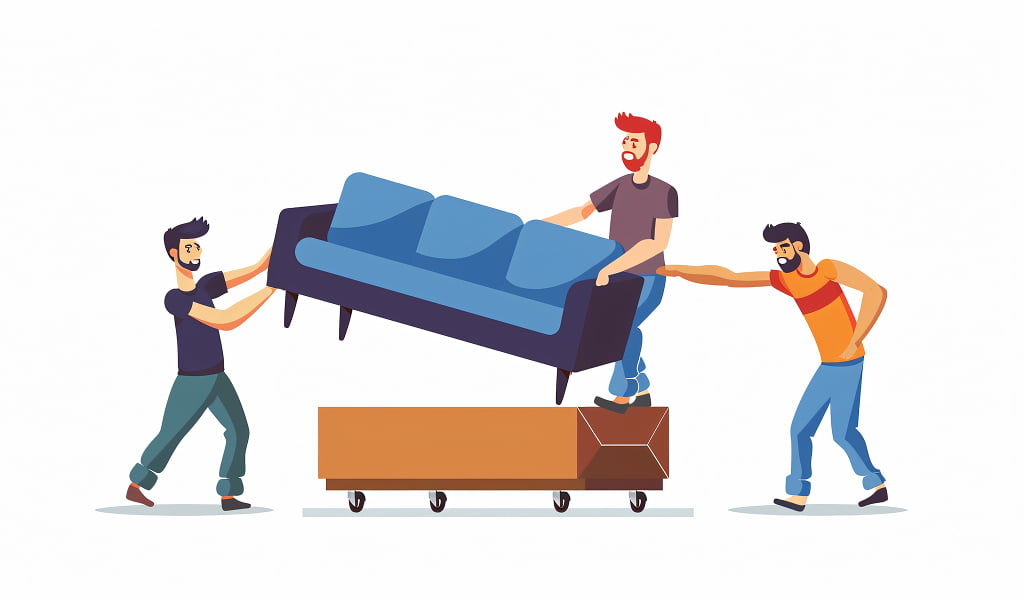
Use tools that can handle heavy furniture and make lifting easier.
By using these simple but effective tools, you make it much easier to move your sofa around, fitting it smoothly into a 5 ft elevator. Choose ones that are high-quality, durable, and the right size.
These tools are really important for a successful move because they help you move large pieces with ease. By reducing friction and spreading out the weight, sliders and dollies let you “dance” your furniture into place easily. They’re not just helpful—they’re essential for finding smart moving solutions.
Rotate Sofa During Transportation
When it’s time to rotate the sofa, using patience and precision with the right strategy is key. Slowly lifting and turning the sofa helps you get it into a horizontal or vertical position so it fits perfectly.
By knowing the size of your elevator, you can imagine a “rotating pivot” as a key spot for adjusting. This pivot acts like a turning point in the elevator, helping you angle the sofa efficiently. As you pivot, make sure the base faces the back of the elevator to get the right swing for a smooth move.
Pivoting Techniques
Mastering pivoting techniques is crucial for fitting a sofa in a 5 ft elevator. These strategies help you use the space creatively.
- Diagonal Positioning: Start by placing the sofa diagonally to make it easier to move.
- End Over End: Rotate the sofa end over end, using angles to get through tight spaces.
- Wall Leverage: Use the elevator walls for extra control.
- Sequential Pivoting: Keep changing positions, only moving when each angle works.
Precision and patience are key for using these pivoting techniques effectively. These strategies are meant to turn challenges into successes.
Use these methods with a focus on success. They help you fit your sofa in a 5-foot elevator with ease and efficiency.
Using Angles to Your Advantage
When fitting a sofa in a 5 ft elevator, using angles smartly can make a big difference.
- Position Vertically: Start by placing the sofa upright to use the height and save floor space.
- Diagonal Shift: Tilt the sofa diagonally to make the most of the corner space inside the elevator.
- Rotate Strategically: Carefully turn the sofa around its center to get through the tight entry and exit points.
Using these angle-based strategies can make the task seem less challenging.
Be creative to turn obstacles into opportunities, ensuring a smooth and successful elevator ride.
Be Mindful of Safety Precautions
Safety is more important than convenience.
Before moving the sofa into the 5 ft elevator, make sure to do thorough safety checks. Ensure the elevator is working properly and can handle the weight of the sofa without going over its limit. Be aware of your surroundings to avoid damaging the elevator or the sofa.
Get a few people to help move the sofa.
Always protect sharp edges with padding or blankets to prevent scratches on both the sofa and the elevator walls. This keeps everything safe and shows professionalism by maintaining the quality of the property.
Lastly, be careful of the strain when handling heavy furniture. Use lifting techniques that protect your back by bending your knees instead of your waist, and consider using equipment like dollies to make moving easier. Taking these precautions shows diligence and boosts confidence in successfully fitting a sofa in a 5-foot elevator.
Control the Elevator Movement
Before you start moving the sofa, having good coordination is important to make the process easier. Assign someone to hold the elevator door open to prevent it from closing unexpectedly, creating a stable work environment.
If you need to keep the door open for a while, use tools like a “door stop.” This helps keep the door open during the task. Also, having someone oversee the elevator can ensure everything goes smoothly without any unwanted stops.
Avoid Crowded Hours
When planning to fit a sofa in a 5 ft elevator, timing is key. Picking the right moment can make moving much easier.
In 2023, moving experts found that elevators are busiest during early mornings, lunch hours, and late afternoons. These times can lead to longer waits and more stress.
Luckily, most elevators in residential or commercial buildings are less crowded during mid-mornings or early afternoons. This quieter time is perfect for moving your sofa without delays or pressure.
Paying attention to elevator usage trends and planning your move during these calm periods shows smart time management. Using these quieter hours can turn a tough task into a smooth operation, boosting your confidence.
Choosing less busy times lets you focus on the details instead of dealing with crowded spaces.
Communicate with Other Residents
Talking with your neighbors ahead of time helps make moving a sofa in a 5-foot elevator easier and builds a sense of community.
Letting others know about your moving plans can help them adjust their schedules.
Clear communication reduces conflicts and surprises, promoting understanding and cooperation among residents. This can be as simple as leaving a polite note in the lobby or having a quick chat, explaining your moving plans, possible challenges, and how it might affect shared spaces.
By working well with your neighbors, you make the move smoother and build goodwill for the future. A friendly “thank you” can create a sense of camaraderie and make living together more enjoyable, encouraging future teamwork.
Handle Tight Corners in Elevators
Getting a sofa around tight corners in a 5-foot elevator can be tricky.

Moving companies with lots of experience recommend using the pivot method. This means lifting one end of the sofa higher and slowly turning it around the corner to make it fit better.
It’s not just about using strength; it’s about understanding the space. Use the elevator’s height and depth by tilting the sofa vertically, keeping control to avoid hitting the corners or causing damage.
Have team members inside and outside the elevator to help guide and support, allowing for careful movements in the small space. If you don’t have enough people, use mobile apps with augmented reality to plan the move ahead of time.
By mastering how to get around corners, you turn a tough challenge into a success, showing both skill and flexibility.
Embrace the Challenge with Confidence
Navigating the art of fitting a sofa into a 5 ft elevator is not merely a task of logistics; it is an opportunity to transform constraints into creativity and challenges into triumphs. With precise measurements, strategic planning, and a dash of ingenuity, what may seem daunting becomes an exercise in innovation and teamwork.
Remember, every challenge that arises is a step towards improvement and mastery, where each solution is a testament to your resourcefulness and determination. Embrace each phase of the process with an optimism rooted in preparation and a confident belief in your capabilities.
From disassembling furnishings to enlisting a supportive team, every strategic approach serves as a reflection of your ability to tackle obstacles with poise. Protective covers, pivot techniques, and the wise use of furniture-moving tools all speak to a forward-thinking strategy that prizes both efficiency and care.
Adopting a mindful approach ensures safety remains paramount, allowing the move to be smooth and satisfying. By engaging with the people around you and communicating effectively, you not only facilitate a seamless transition but also nurture a sense of community that resonates beyond the immediate task at hand.
As you conclude this journey, carrying a sofa through a compact elevator, relish the completion of this endeavor with a sense of achievement. Let this victory bolster your confidence in handling future challenges with the same skillful and determined mindset. With the right strategies and collaboration, fitting a sofa into a limited space becomes more than a task—it transforms into a rewarding experience imbued with both personal and collective accomplishment.


